Your employees are probably already using AI.
They may be using ChatGPT to rewrite emails, summarize notes, brainstorm social posts, explain spreadsheets, draft policies, or troubleshoot software.
That is not automatically bad.
The risk is unmanaged AI use.
If your business has no AI policy, employees are left to guess what is safe. That is how customer data, internal documents, legal details, medical information, passwords, and private business plans end up in tools they should not be using for that purpose.
You do not need a 40-page policy to start. You need clear rules.
Data point: Verizon's 2026 DBIR highlights software vulnerabilities as the leading initial access path in breaches, and the broader risk story is clear: unmanaged tools and unmanaged data create exposure. AI policy should sit next to security policy, not separate from it.
The Simple AI Policy Template
Employees may use approved AI tools for rewriting non-sensitive emails, brainstorming marketing ideas, summarizing public information, drafting internal checklists, explaining formulas, creating first drafts, and improving grammar and clarity.
AI output must be reviewed by a person before it is sent to customers, published, or used for business decisions.
Employees may not paste or upload customer private information, medical records, legal case details, financial records, tax documents, employee records, passwords, API keys, source code with secrets, confidential contracts, proprietary plans, or vendor credentials.
When in doubt, do not paste it.
Human Review Required
AI can draft. A human decides.
Human review is required for customer-facing messages, legal or compliance language, pricing, hiring decisions, medical advice, financial advice, public posts, sales promises, system changes, and anything that affects a client account.
AI can be wrong. It can sound confident and still be wrong.
Approved Tools
List the tools employees are allowed to use.
For example:
- approved company AI assistant
- approved ChatGPT workspace
- approved Microsoft or Google AI tools
- approved transcription tool
- approved internal automation system
Personal AI accounts should not be used for sensitive company work unless the business has reviewed the risk.
Data Classification
Keep this simple.
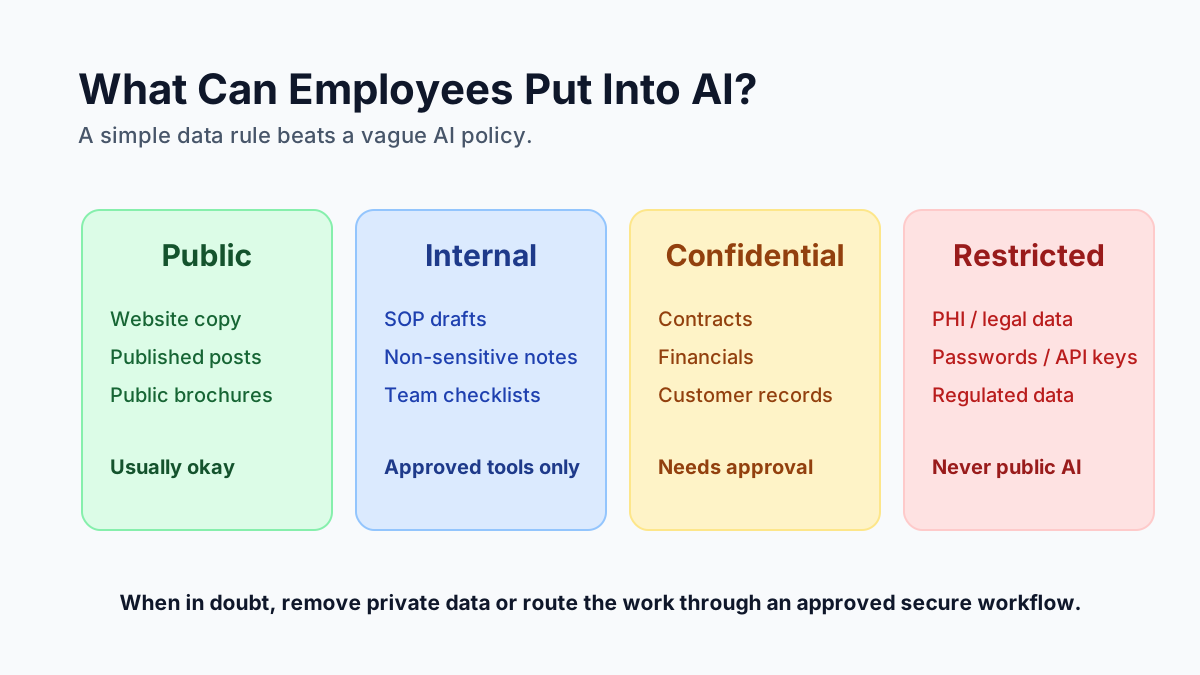
Public: Safe to use with AI. Examples: website copy, public brochures, published blog posts.
Internal: Use only with approved tools. Examples: SOPs, internal notes, non-sensitive drafts.
Confidential: Do not use without approval. Examples: contracts, financials, customer records, employee records.
Restricted: Do not enter into public AI tools. Examples: medical records, passwords, API keys, regulated data, legal case details.
Why This Matters Now
AI adoption is moving fast among small businesses. The businesses that win will not be the ones that ban AI completely. They will be the ones that use it with clear rules, practical training, and secure workflows.
The U.S. Chamber has been tracking how AI is becoming a growth engine for small businesses. That is the opportunity. But the opportunity comes with responsibility.
AI should help your team move faster without putting customer trust at risk.
What To Do This Week
If you do not have an AI policy, do this:
- Pick approved AI tools.
- List what data cannot be pasted.
- Define what requires human review.
- Train the team with examples.
- Review any workflow that touches customer data.
You can start with the copyable small business AI policy template and adjust it for your tools, team, and data rules.
Tech Adventures helps small businesses adopt AI without creating a security mess. If your team is already using AI and you want practical guardrails, start with AI consulting or managed IT and security.
Sources:
Frequently Asked Questions
Does a small business need an AI policy?
Yes. Even a short one-page AI policy helps employees understand what data they can use with AI tools, what requires approval, and when human review is required.
What should employees never paste into public AI tools?
They should avoid customer private data, medical records, legal documents, passwords, API keys, financial records, employee records, trade secrets, and anything covered by a contract or compliance requirement.
Ready to Automate Your Business?
Book a free workflow review and discover which processes you should automate first.